















In every mineral lies a story, one written by time, pressure, and elemental balance.
At World Mineral Galleria, we celebrate these natural masterpieces as both scientific wonders and works of art. Each specimen reveals the Earth's patience and precision, a dialogue between nature's geometry and light.
Through thoughtful curation and visual storytelling, WMG seeks to bridge the world of minerals with design, emotion, and culture. Reminding us that beauty, when born from nature, is both eternal and true.
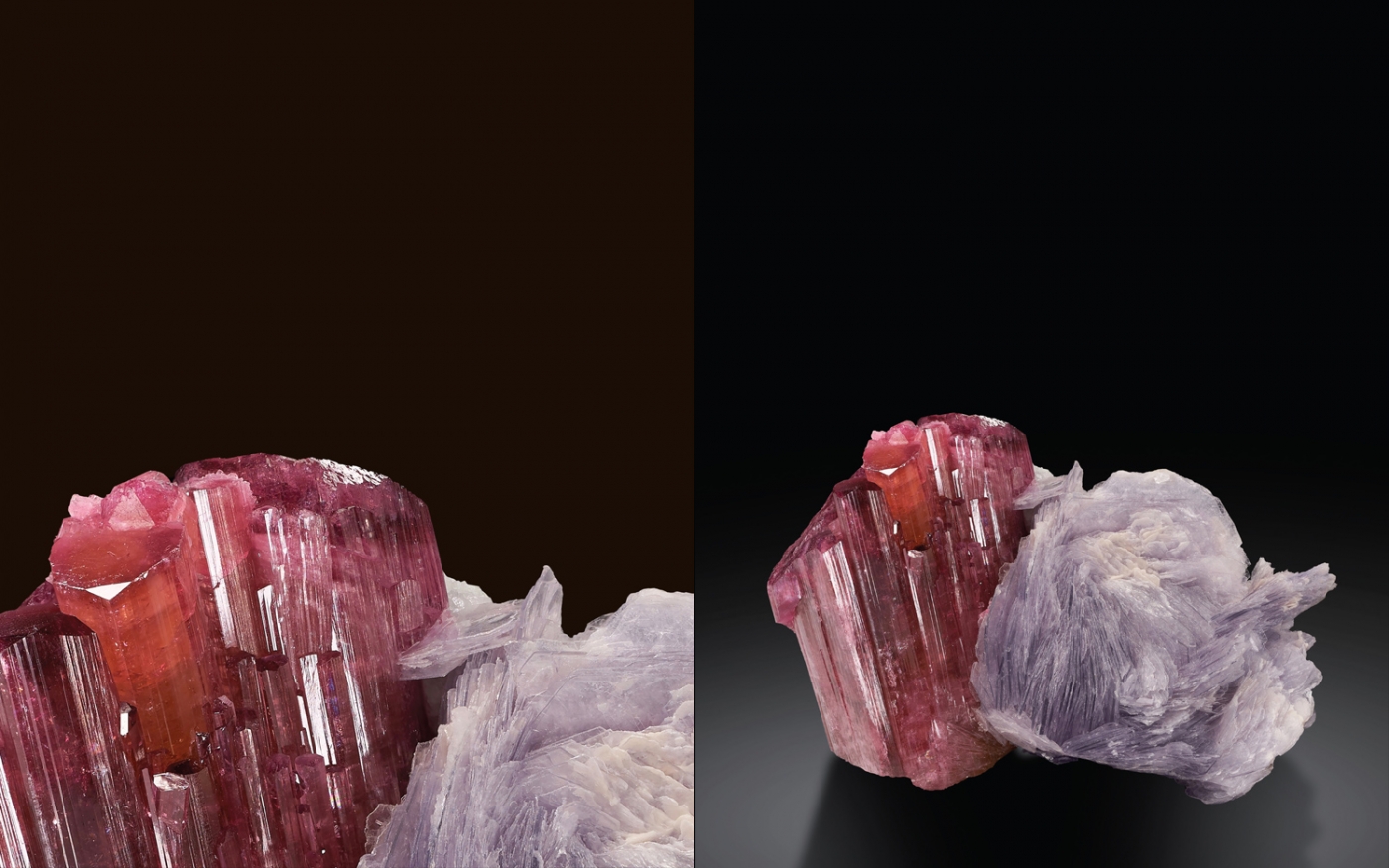
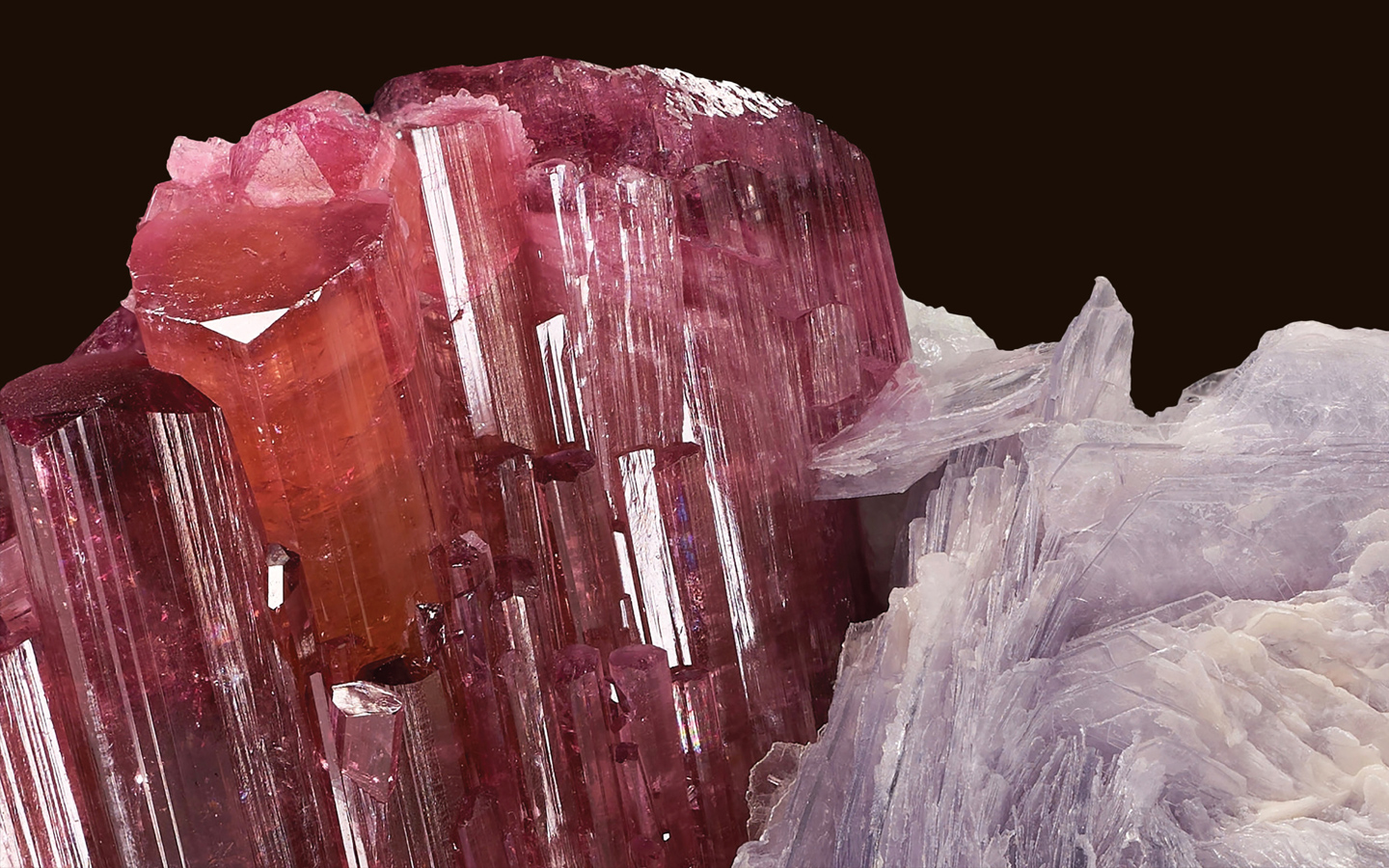
Tourmaline & Mica
Origin: Russia
Sourced primarily from the Ural Mountains, these specimens feature vibrant tourmaline crystals (often pink, green, or bi-colored "watermelon" varieties) set against a backdrop of shimmering mica sheets (typically muscovite or lepidolite). The silvery or pearlescent luster of the mica provides a striking contrast that accentuates the glassy transparency and rich color of the tourmaline. This combination is a classic hallmark of Russian mineralogy, prized for its aesthetic layering and historical significance.
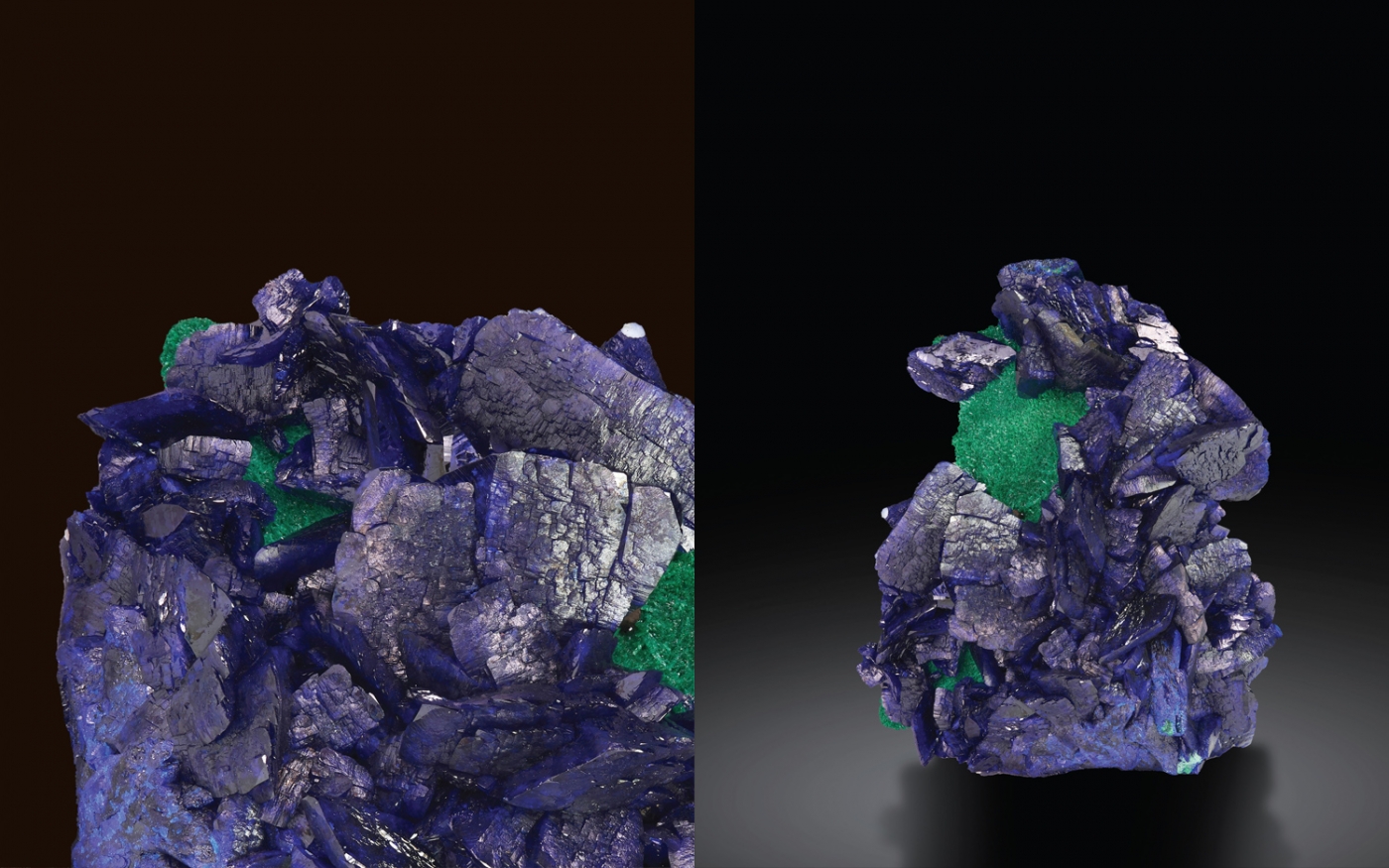
Azurite & Malachite
Origin: Anhui Province, China
Chizhou is renowned for producing world-class specimens where deep royal blue azurite crystals coexist with vivid emerald-green malachite. As chemically similar copper carbonates, they frequently form together. The specimen typically showcases sharp, prismatic azurite crystals nestled among silky, fibrous, or botryoidal malachite. The dramatic contrast between the intense blue and bright green, combined with excellent crystal definition, makes these Chinese specimens highly sought after by collectors globally.
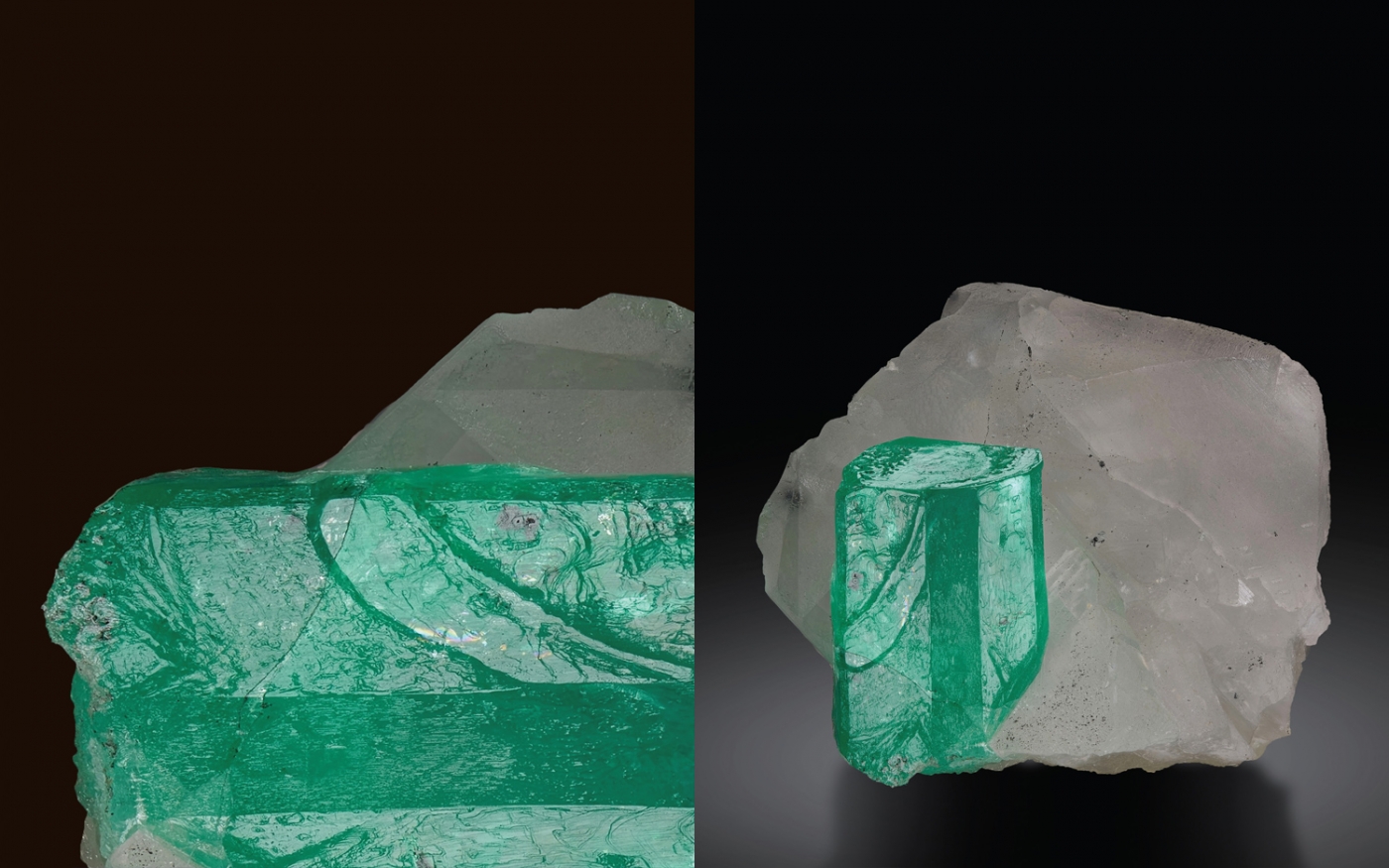
Emerald & Quartz
Origin: Colombia
Colombia, home to famous mines like Muzo and Chivor, produces the world's finest emeralds, known for their intense "Muzo green" color and high clarity. In these formations, hexagonal emerald crystals are often found embedded in or growing alongside clear quartz (rock crystal) or white calcite. The transparent quartz acts as a natural pedestal, protecting the precious emerald while enhancing its visual depth and fire through light refraction. This pairing represents the pinnacle of luxury mineral specimens, combining rarity with breathtaking beauty.
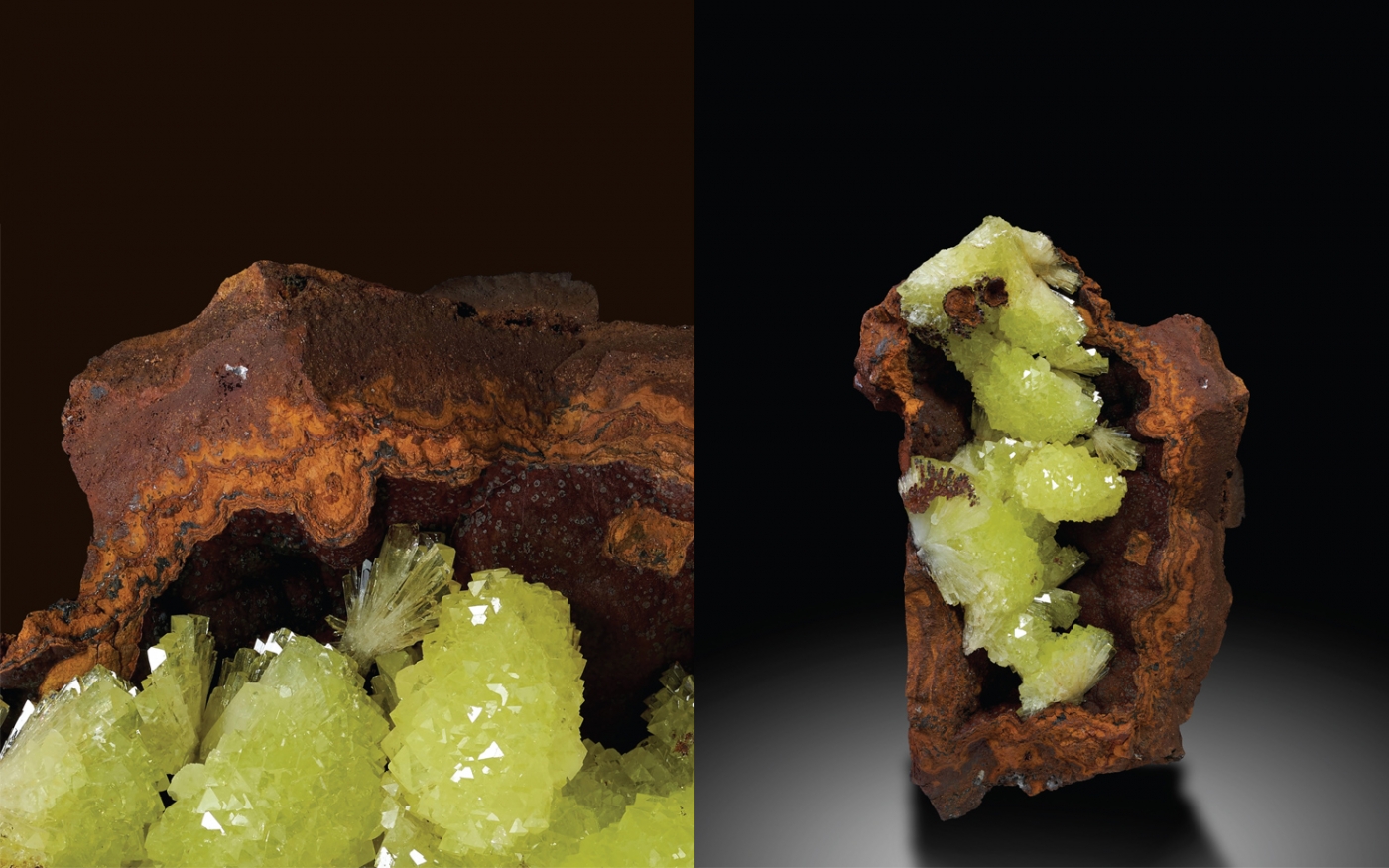
Adamite
Origin: Mexico
This Adamite specimen presents as a radiating cluster of slender crystals. Its yellow-green colour is typically influenced by trace amounts of copper or iron, while pure Adamite is colourless to white with a vitreous lustre. Under ultraviolet light, it often shows a strong lemon-yellow to yellow-green fluorescence. With a Mohs hardness of 3.5, it is relatively soft and brittle.
Formed as a secondary mineral in the oxidised zones of zinc deposits, Adamite is commonly associated with arsenate-rich environments. Material from Mexico is especially noted for its well-defined crystal form and bright colour, making it a consistent favourite among collectors.
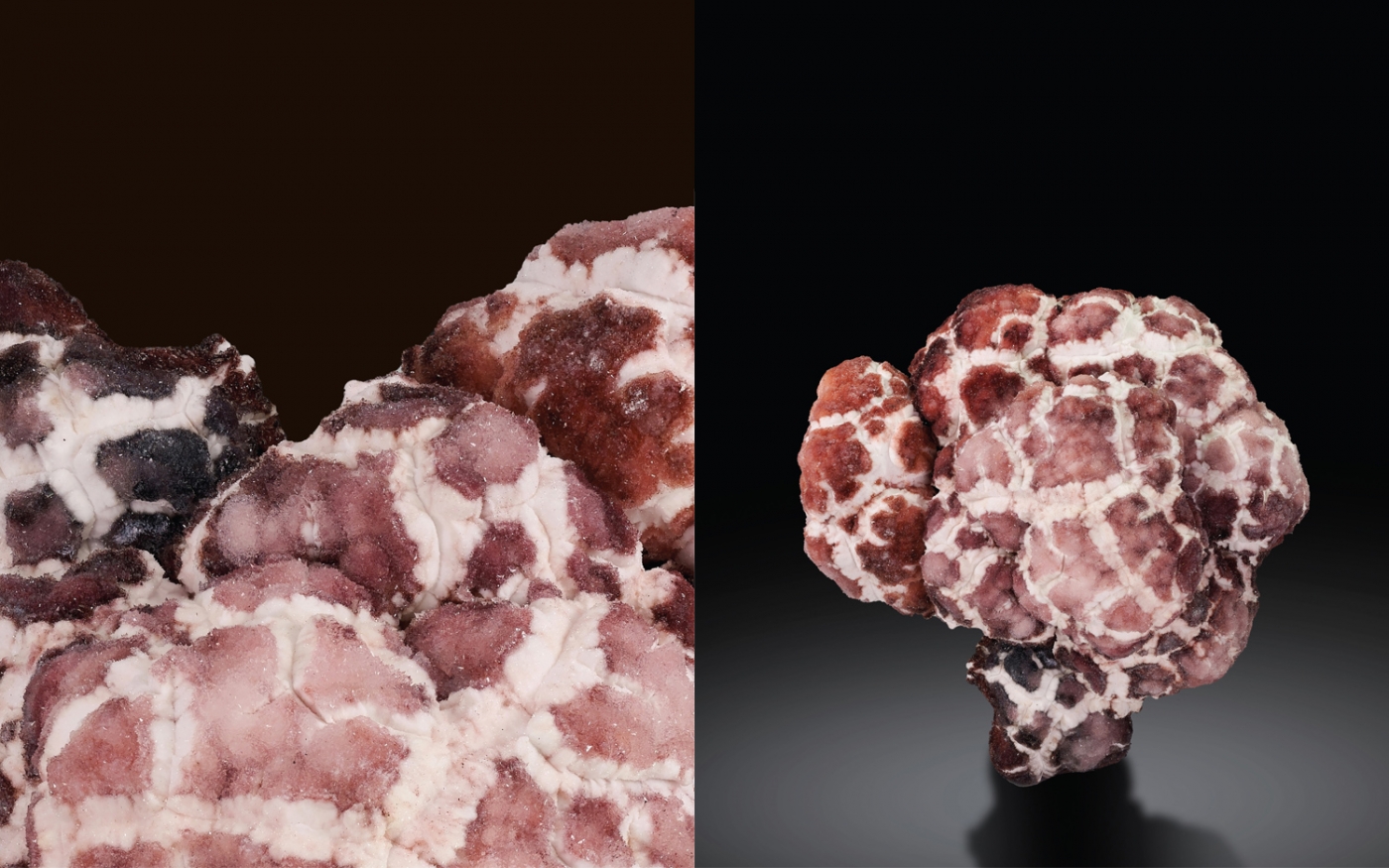
Creedite
Origin: Guizhou Province, China
Deep purplish-red Creedite appears here as fine acicular aggregates set against a white matrix. Across the surface, hemispherical to botryoidal nodules are packed closely together, each composed of extremely fine microcrystals. The result is a clearly defined, honeycomb-like texture that gives the specimen its character. Due to the minute crystal size, the surface appears dull to earthy rather than reflective.
Creedite is a calcium aluminium fluorosulfate mineral formed in the oxidised zones of fluorine-rich hydrothermal systems. It is often linked to the alteration of sulphide deposits under acidic conditions. Specimens from Dachang Mine are known for this compact, nodular habit and their distinctive cellular surface structure.
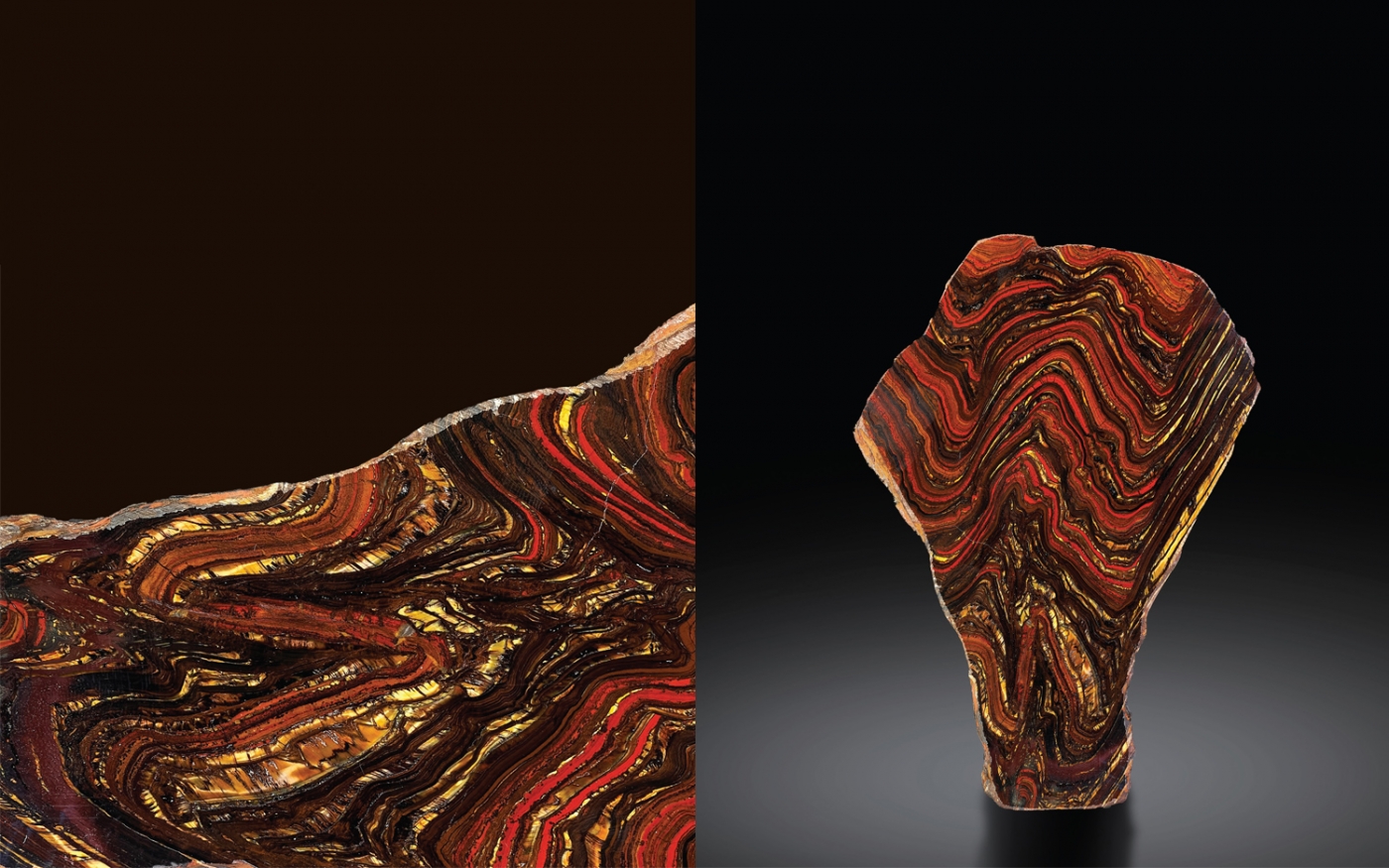
Tiger's Eve
Origin: Australia
This specimen of Iron Tiger's Eye from Australia formed around 2.5 billion years ago as part of ancient banded iron formations. These began as layers of iron and silica-rich sediments deposited on the ocean floor, later transformed by pressure, heat, and hydrothermal activity over time.
The red areas are mainly hematite, while the golden bands with a soft, silky sheen are characteristic of Tiger's Eye quartz. Together, they create layerzed patterns of gold, reddish- brown, and dark grey with a natural sense of movement.
Iron Tiger's Eye is widely used in jewellery, carvings, and decorative objects. It has also found its way into interior applications such as furniture surfaces, countertops, and tiles, where its banding adds texture without overwhelming a space.
World Mineral Galleria Sdn Bhd
Address: 168, Jalan Maarof, Bukit Bandaraya, 59100 Kuala Lumpur, Malaysia.
Contact: (+603) 2201 3777
Email: enquiry@mineralgalleria.com
Website: www.mineralgalleria.com/Mall/home.asp
Facebook: www.facebook.com/wmg168/
Instagram: www.instagram.com/worldmineralgalleria/